Motor reliability · Symptoms · VFD
Bearing Fluting in Electric Motors
If you are seeing odd vibration, grease changes, or repeat bearing replacements on inverter-duty motors, start here—then connect symptoms to electrical root causes and mitigation options.
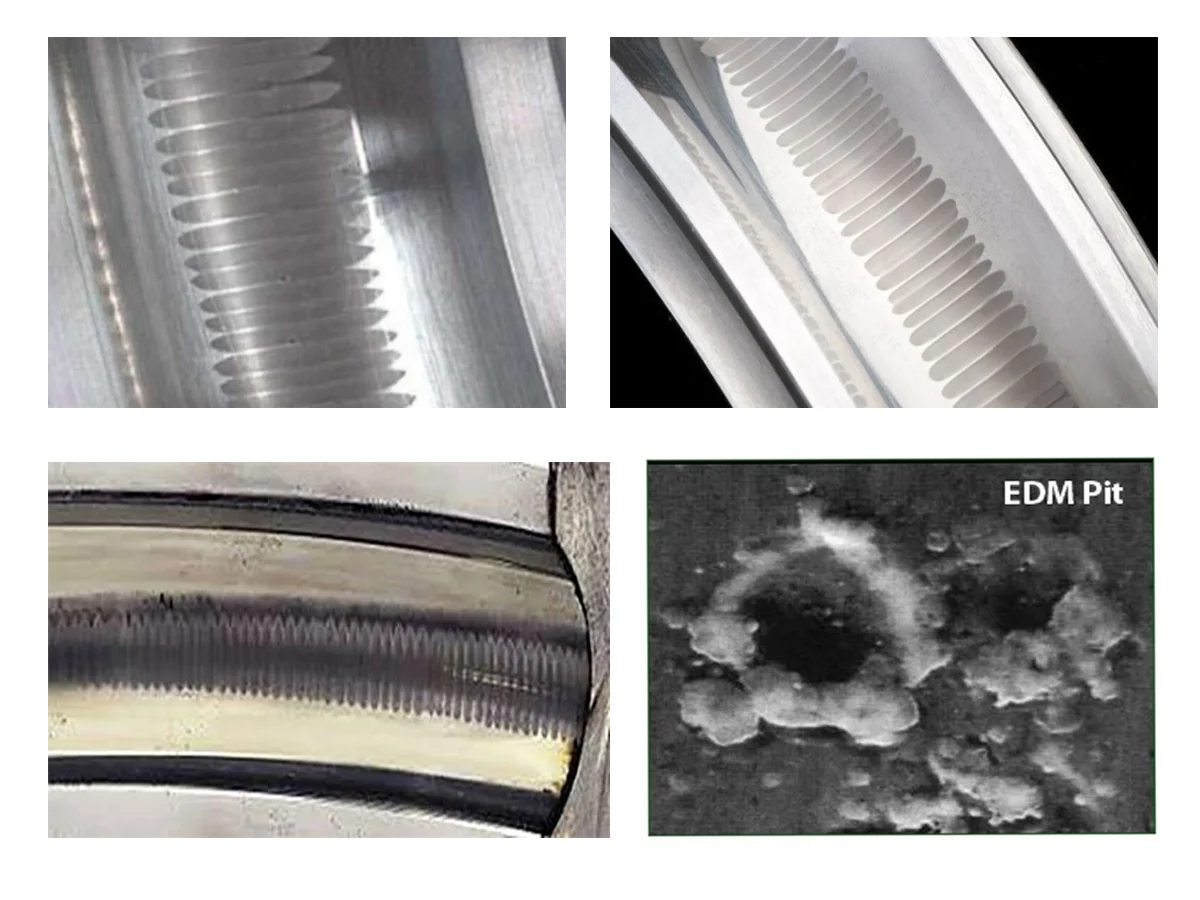
What is bearing fluting?
Fluting refers to periodic, machined-looking grooves or washboard patterns on a bearing raceway—often linked to repetitive electrical discharge machining (EDM) events across the lubricant film.
The pattern can be subtle early on and is frequently discovered during a bearing change-out, not from a single obvious mechanical defect.
Common symptoms and field clues
Fluting is a symptom family, not a single vibration number. Combine inspection evidence with duty context (especially VFD operation).
- Washboard or corrugated patterns on inner or outer races, sometimes described as ‘phonograph tracks’.
- Grease darkening, burnt odor, or metallic glitter that appears inconsistent with normal mechanical wear alone.
- Rising HF vibration or noise without a clear imbalance, misalignment, or looseness progression.
- Bearings that ‘look fine’ mechanically but fail again after a short interval—especially on the drive end.
Why fluting shows up in VFD-driven motors
VFDs change the voltage waveform at the motor terminals. That can elevate shaft-to-frame potential and create conditions where current repeatedly seeks a path through the bearing.
- Fast switching edges and common-mode voltage drive high-frequency currents in the motor frame and rotor circuit.
- Stray capacitances in windings, rotor, and cables can couple energy onto the shaft.
- Long motor leads, poor grounding practice, or certain filter configurations can increase exposure—site-specific.
Why fluting leads to failure
Each micro-discharge removes microscopic material. Over months of runtime the damage accumulates into measurable raceway geometry changes and lubricant breakdown.
- Surface fatigue accelerates; spalling can follow the fluted region.
- Lubricant film integrity degrades, increasing heat and friction.
- NVH complaints and unplanned stops rise—often after multiple ‘mystery’ bearing replacements.
Need a second opinion on a failed bearing?
Photos of the raceway, grease condition, and basic motor/VFD details are often enough for an initial electrical-vs-mechanical triage.
How to prevent it (and where shaft grounding fits)
Prevention is usually a stack: good installation and bonding practices, cable and drive settings where applicable, and a controlled shaft discharge path when bearing currents are part of the risk picture.
- Treat repeat bearing failures on inverter-duty assets as a system problem—motor, cables, drive, and grounding together.
- Add or upgrade a shaft grounding device to provide a low-impedance path to frame ground so discharge does not repeatedly traverse the bearing.
- Align maintenance inspections to look for early electrical pitting signatures during planned bearing changes.
Next: shaft grounding for industrial motors
This companion guide explains how shaft grounding reduces bearing current exposure in inverter-duty industrial motors—written for teams who already recognize fluting risk.
Open the shaft grounding guideDiagnose VFD bearing failure carefully
Move from fluting symptoms to electrical-vs-mechanical triage, shaft-voltage check preparation, and corrective-action logic.
Read: What Causes VFD Bearing Failure?Choose between grounding rings and insulated bearings
When electrical erosion is confirmed or strongly suspected, compare how shaft grounding rings and insulated bearings address different current paths—and when both may be needed.
Read: Shaft Grounding Ring vs. Insulated BearingMove from symptom to mitigation
Use the form to share motor nameplate, shaft size, and whether the asset is VFD-controlled. We can recommend next validation steps and point you to the right grounding approach.
