Repeated bearing replacement on the same HVAC fan motor
Short replacement intervals are a reason to review electrical and mechanical causes together. Recurrence alone does not prove shaft current.
HVAC Motors / VFD Fan Motor Bearing Protection
Connect repeated bearing failure on AHU, cooling-tower, and ventilation fan motors with shaft-voltage diagnosis and a practical shaft-grounding review—without assuming every HVAC motor needs an SGR.
Related: Industrial Motors (process fans & general inverter-duty motors)
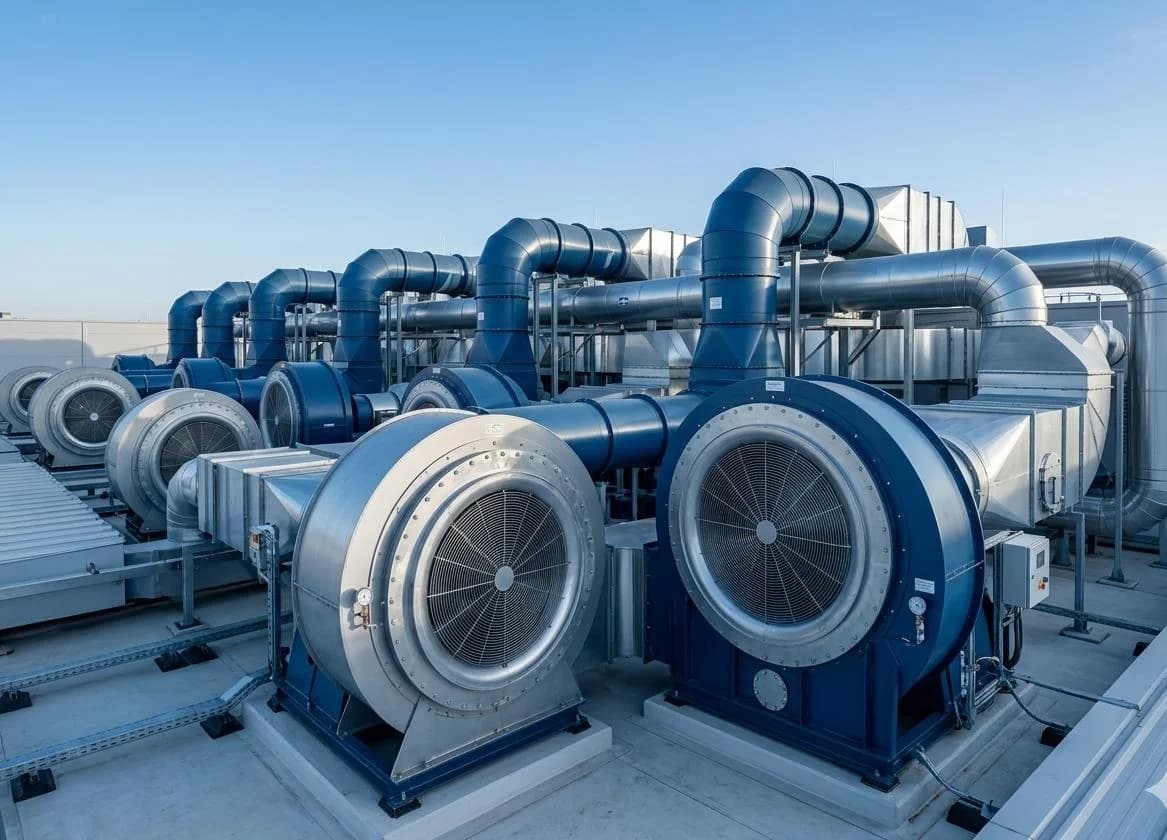
Facility and OEM teams often see recurring fan-motor bearing work after VFD conversion or under continuous variable-speed duty. Mechanical causes remain common; electrical discharge is one hypothesis to test when patterns keep returning.
Short replacement intervals are a reason to review electrical and mechanical causes together. Recurrence alone does not prove shaft current.
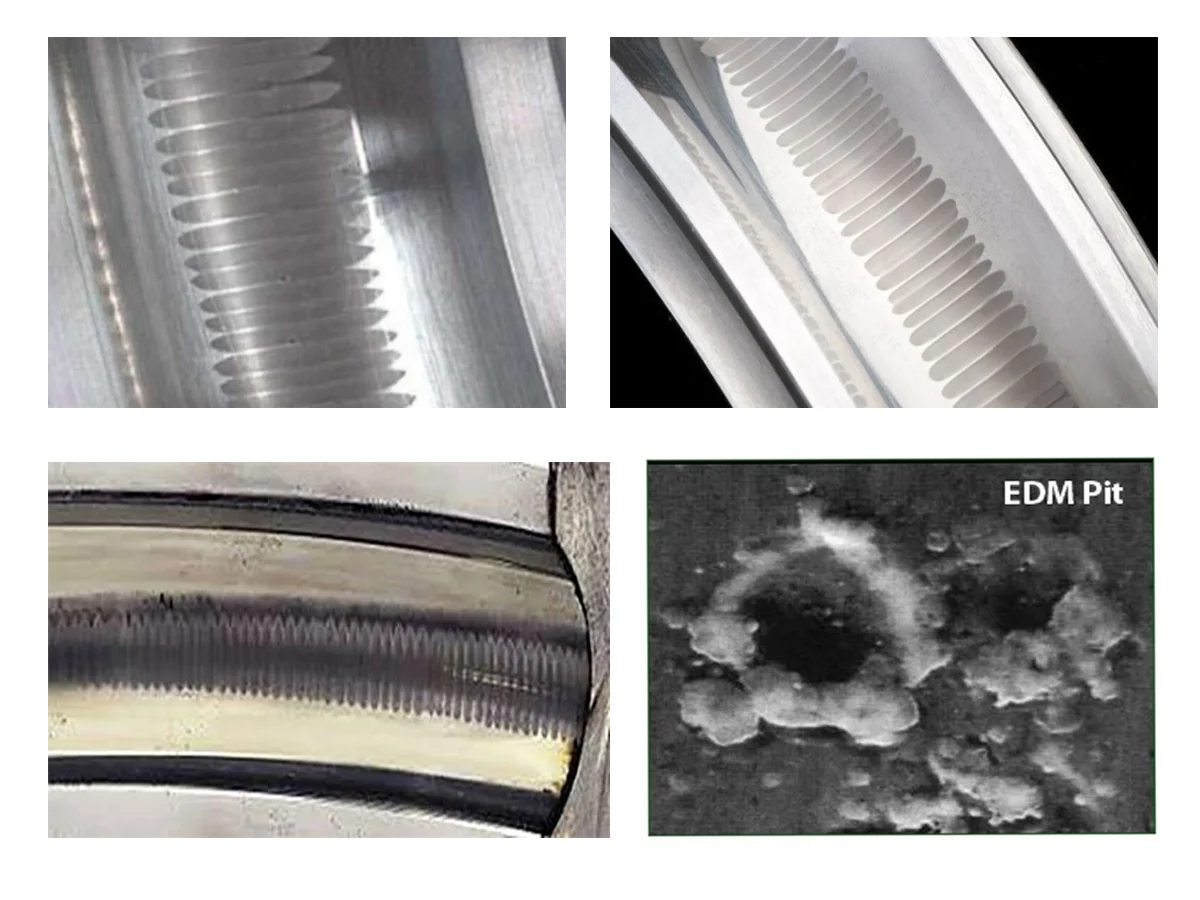
These patterns can be consistent with electrical discharge under rotation. Visual appearance still needs operating context and, where possible, supporting evidence.
Noise and vibration can come from lubrication, contamination, imbalance, or electrical wear. Treat them as prompts to inspect—not as a finished diagnosis.
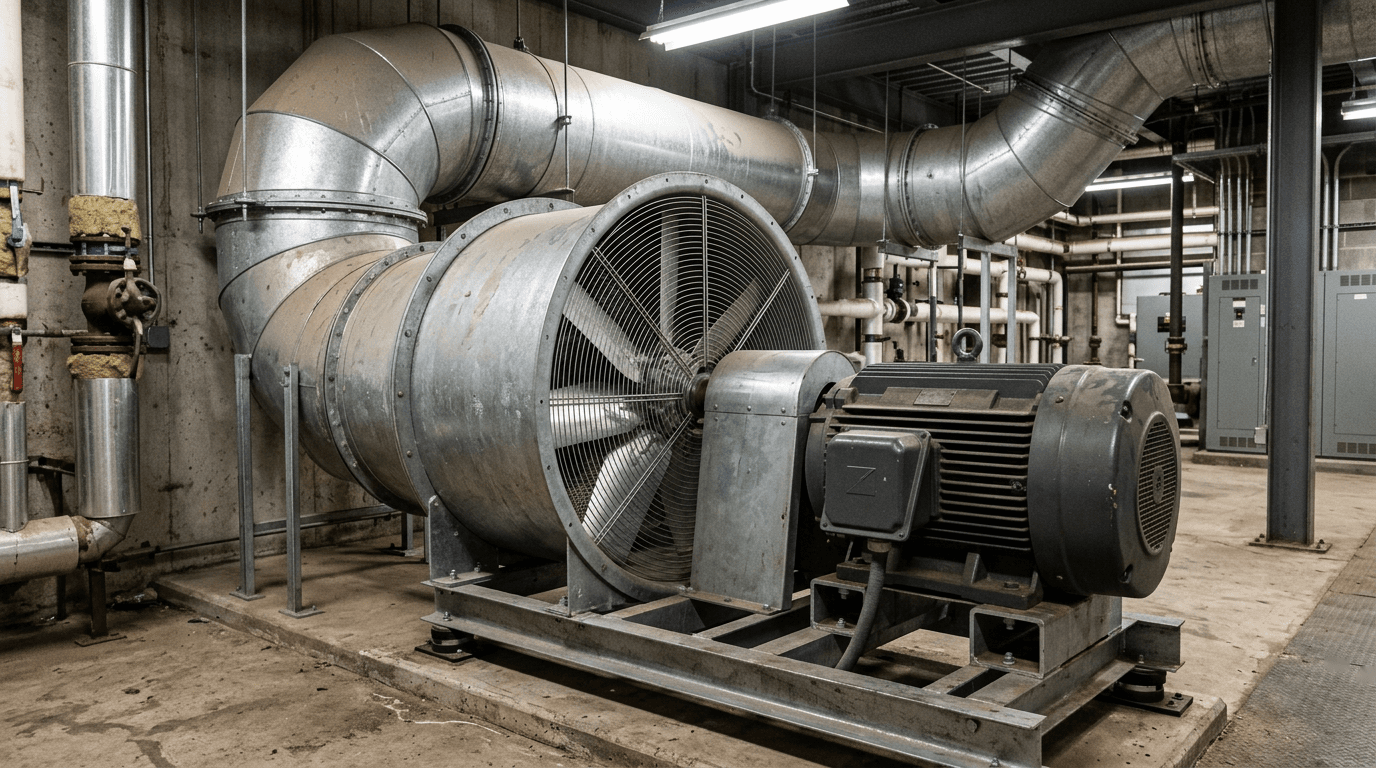
AHU and cooling-tower fans often run long hours. Electrical and mechanical wear can accumulate between planned maintenance windows.
Unplanned fan stops disrupt HVAC service levels. A controlled review path helps teams decide whether shaft grounding belongs in the next corrective action.
This page focuses on building HVAC and air-movement motors—not generic industrial process fans covered on the Industrial Motors application.
Air-handler supply/return fans on VFDs where access, guarding, and continuous duty shape both diagnosis and retrofit feasibility.
Outdoor or rooftop tower fans with humidity, contamination, and service-access constraints that affect mounting and contact quality.
Ventilation and exhaust trains with variable airflow demand, where PWM duty is common and shaft-end reach can be limited.
Centrifugal and blower packages used in HVAC air movement—distinct from generic process fans covered on the Industrial Motors page.
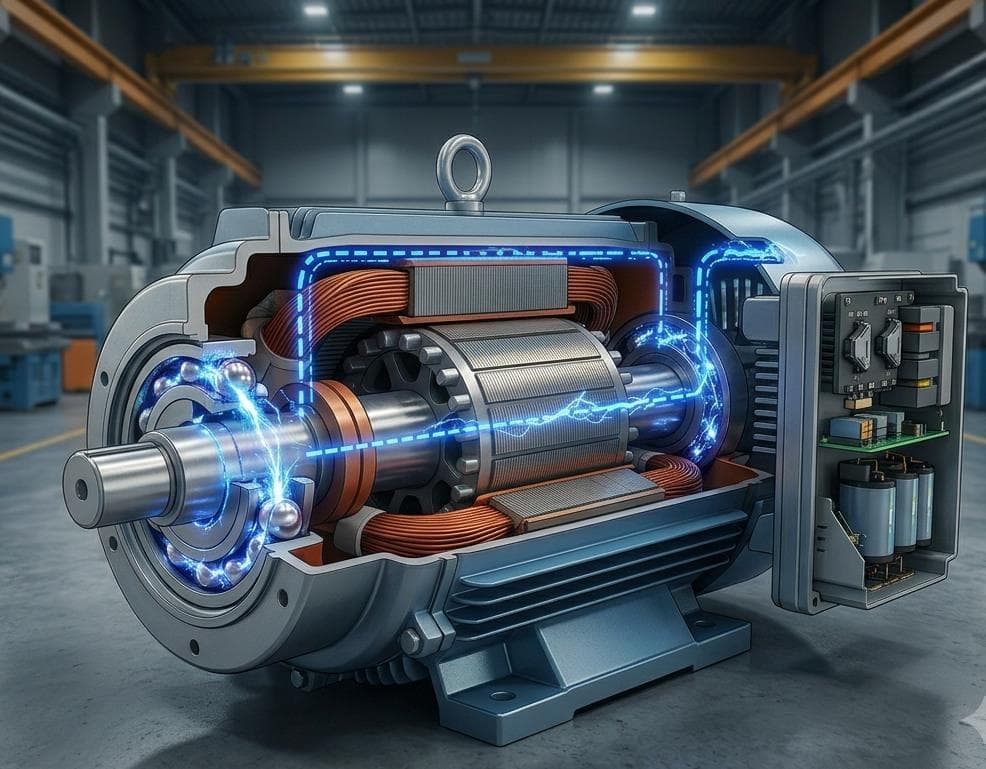
Inverter PWM switching can introduce common-mode voltage. Parasitic capacitance couples stress to the rotor, and shaft voltage may seek a discharge path through bearings when other paths are higher impedance.
SGR applicability depends on motor structure, shaft access, speed, mounting space, grounding path, and actual diagnosis. Grounding, cabling, insulation, and common-mode control measures may also matter—and a ring is not a universal cure.
Separate hypotheses before specifying hardware. Use inspection, history, and measurement where safe access exists.
| Factor | Mechanical view | Electrical view |
|---|---|---|
| Misalignment | Common mechanical root; check coupling/fan alignment after bearing work. | Does not create shaft voltage by itself; may coexist with electrical damage. |
| Lubrication | Grease type, interval, and contamination frequently explain short life. | Electrical erosion can look different from classic lubrication failure—compare patterns carefully. |
| Contamination / humidity | Dust, moisture, and washdown environments accelerate mechanical wear. | Environment also affects contact-band condition if a grounding ring is later considered. |
| Vibration / imbalance | Fan imbalance and structural resonance are common HVAC mechanical drivers. | Returning vibration after bearing renewal is a clue to reopen electrical review. |
| Shaft voltage | Not a mechanical quantity—requires safe probe access and documented conditions. | PWM common-mode stress can elevate rotor/shaft potential on VFD HVAC motors. |
| Bearing current / EDM evidence | Mechanical inspection alone rarely confirms current magnitude. | Fluting/EDM appearance plus history and measurement context support an electrical hypothesis. |
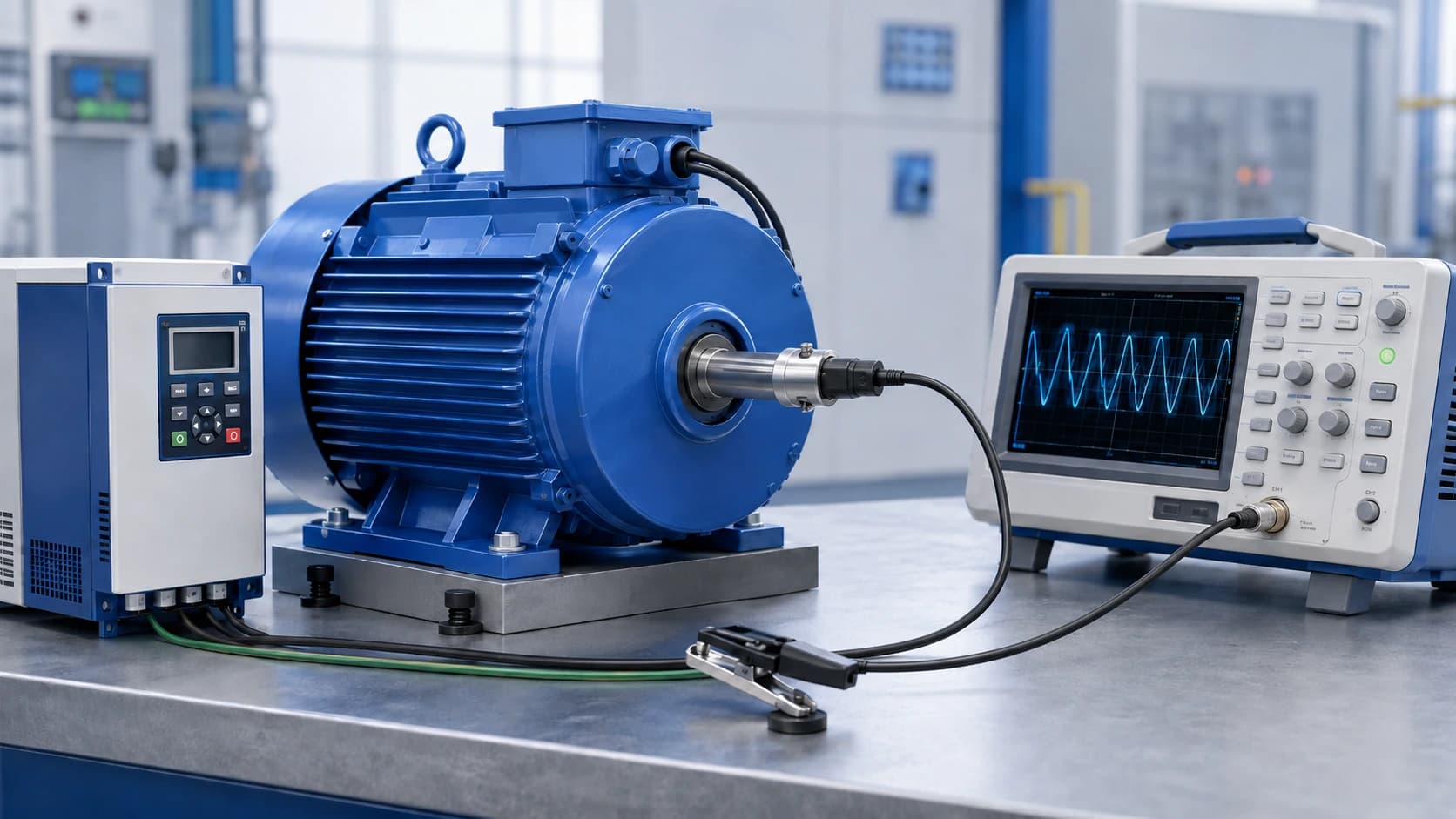
Consider an SGR after diagnosis suggests a shaft discharge path is relevant—and after shaft access and envelope make a controlled contact path feasible.
These scenarios often need extra caution or a different approach:
Map structure to shaft geometry, access, and envelope. Avoid HVAC-specific performance claims that are not supported by site data.
Motor power alone is not a selection key. Solid, split/arc-shaped, and custom options are reviewed by fit—not by assuming every HVAC fan needs the same ring.
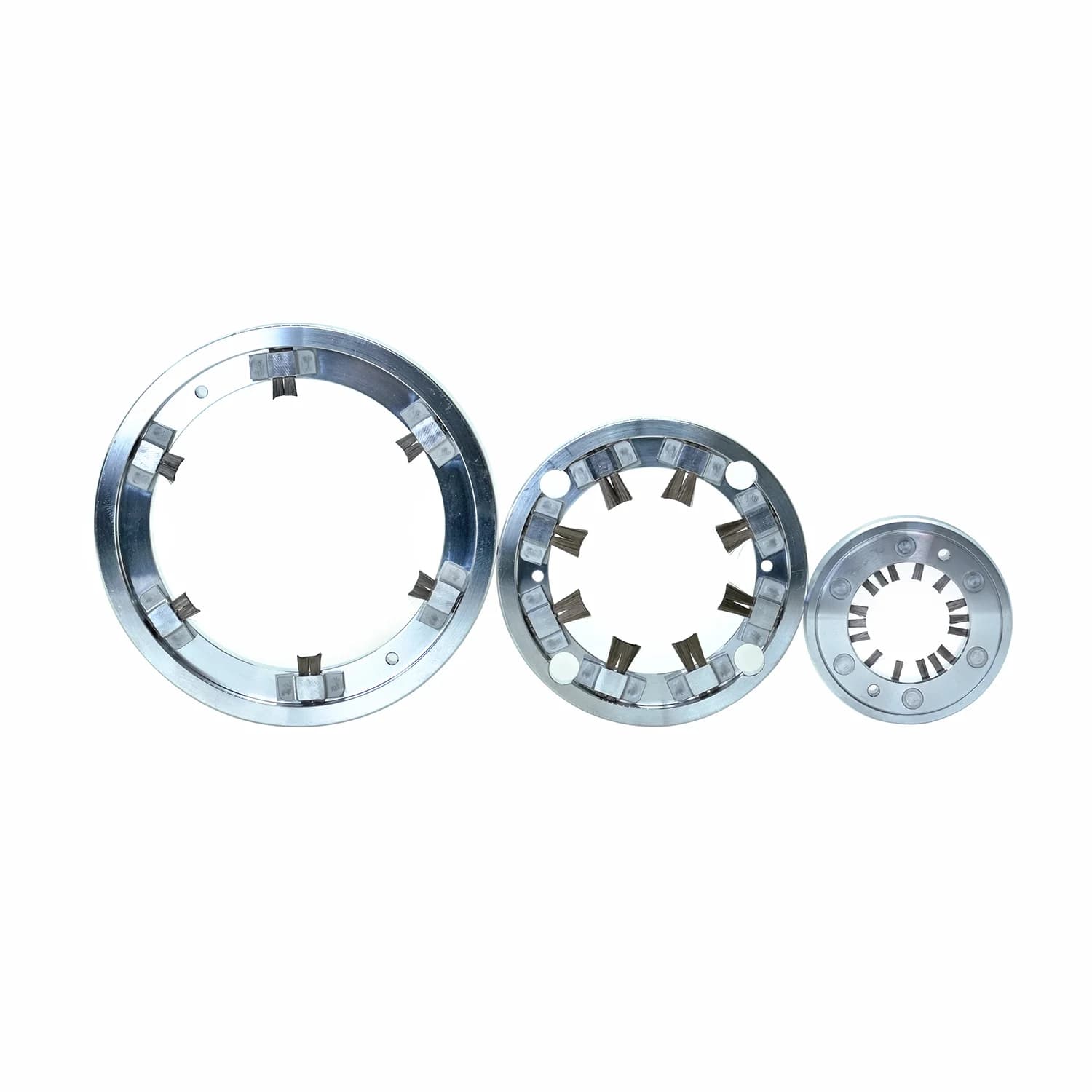
Review where shaft diameter, mounting envelope, and assembly conditions support a solid ring. Mounting method is confirmed by application review—not assumed from catalog.
View product optionOften reviewed first for HVAC retrofit access where shaft reach or envelope favors an arc-shaped structure.
View product optionUse drawing-led custom review when solid or split options cannot match shaft geometry, contact position, or installation envelope.
View product optionAHU rooms, rooftop towers, and guarded fan ends create access and environment constraints that differ from open industrial skids.
Guards, close couplings, and enclosed ends can block both measurement and ring mounting on AHU or tower motors.
Which end is reachable and which end carries insulated bearings changes where a controlled discharge path can be reviewed.
Catalog preference is secondary to the available contact band and clearance around the shaft.
Safety covers and maintenance reach affect whether a retrofit can be installed and inspected later.
Cooling-tower and rooftop duty add humidity and contamination that influence mounting durability and contact quality.
A fitted ring that cannot maintain even fiber engagement or a bonded frame path is not a completed discharge path.
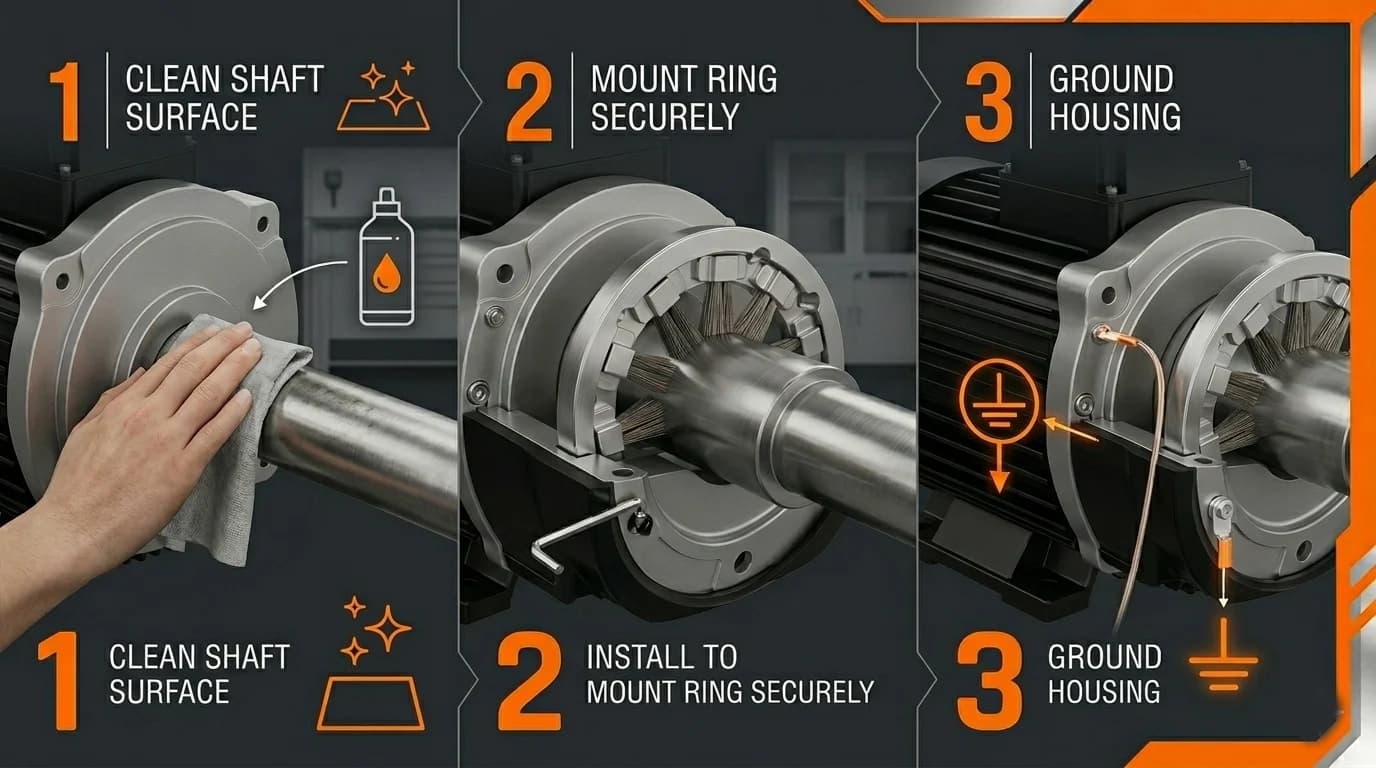
Share what you already have. Nothing is mandatory; include measured shaft voltage only if available. This checklist guides preparation—it does not change the inquiry form schema.
Yes, they can. PWM switching and parasitic coupling can elevate shaft potential, and bearings may become a discharge path. That possibility is a reason to diagnose—not a claim that every HVAC bearing failure is electrical.
Share fan type, shaft diameter, drive details, and access photos when possible. We will help outline whether shaft grounding belongs in the next step—or whether diagnosis should come first.
Prefer a written technical inquiry? Use the form below with application interest set to HVAC motors.
