Shaft Grounding Ring vs. Insulated Bearing: Which Does Your VFD Motor Need?
|
Compare shaft grounding rings and insulated bearings for VFD motor protection. Learn how they address different bearing-current paths and when both may be required.
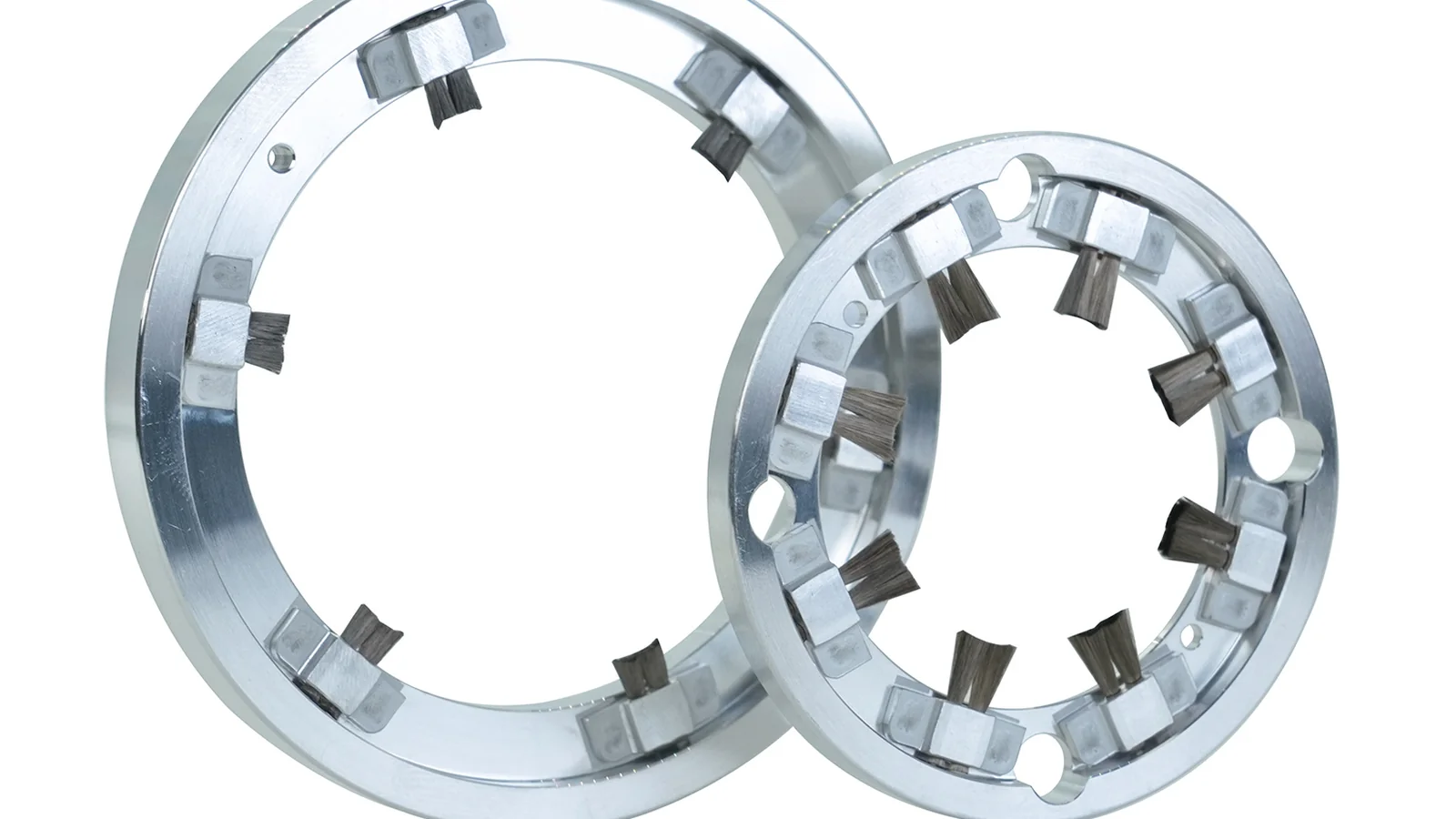
Variable frequency drives improve efficiency and speed control, but their high-frequency PWM switching introduces shaft voltage and bearing current that can damage motor bearings over time. Two protection strategies are commonly discussed: shaft grounding rings and insulated bearings. They are sometimes treated as interchangeable, but they address different aspects of the same problem. Choosing the wrong one—or using only one when both are needed—can leave a motor vulnerable.
This article explains how each solution works, where each one is appropriate, and when a VFD motor may require both.
Quick Answer
A shaft grounding ring provides a controlled, low-impedance path that diverts shaft current from the shaft to the grounded motor frame, helping to prevent that current from discharging through the bearings. An insulated bearing blocks current from flowing through a specific bearing by isolating its raceway or housing from the current path. Neither solution is a universal fix: a grounding ring does not block current on its own; an insulated bearing does not discharge the voltage that has built up on the shaft. For many larger or more complex VFD motor installations, both are used together.
Why VFD Motors Develop Bearing Currents
PWM switching in a VFD creates common-mode voltage on the motor windings. Through capacitive coupling between the rotor and stator, this voltage can appear on the rotating shaft. When the voltage exceeds the breakdown threshold of the bearing lubricant film, current discharges through the bearing. Repeated discharges cause electrical discharge machining (EDM) damage: pitting on the bearing raceway, a frosted surface finish, and eventually bearing fluting and premature failure.
Two distinct current types are relevant. Shaft-to-ground voltage tends to affect smaller motors and causes capacitive discharge current through whichever bearing offers the lowest impedance path to ground. Circulating bearing current occurs in larger motors where the magnetic flux induces a voltage around the motor shaft axis; this drives current circulating through the shaft, bearings, and frame. For a more detailed explanation of the mechanisms, see the article on what causes VFD bearing failure.
For background on these mechanisms: What Causes VFD Bearing Failure?
For a symptom-first overview of fluting appearance: Bearing Fluting in Electric Motors
How a Shaft Grounding Ring Works
A shaft grounding ring uses conductive microfibers that make continuous contact with the rotating shaft and connect to the grounded motor frame. When shaft voltage builds up, the grounding ring provides a controlled, low-impedance path for that charge to flow to ground before it can discharge through the bearing lubricant film.
The key characteristic is that the ring is active with the shaft: it reduces the voltage that remains on the shaft during operation. It does not block current; it redirects it. For this to work, the ring must be correctly positioned on a clean shaft surface, properly secured to the motor housing or end shield, and connected to a reliable ground path.
VOLSUN's solid shaft grounding ring (VS-RD/RDW) and arc-shaped shaft grounding ring (VS-ST/STW) both use metallized carbon fiber contact. They differ in installation approach: the solid ring is installed as a complete ring, while the arc-shaped version can be fitted without removing the shaft coupling—useful for retrofit work.
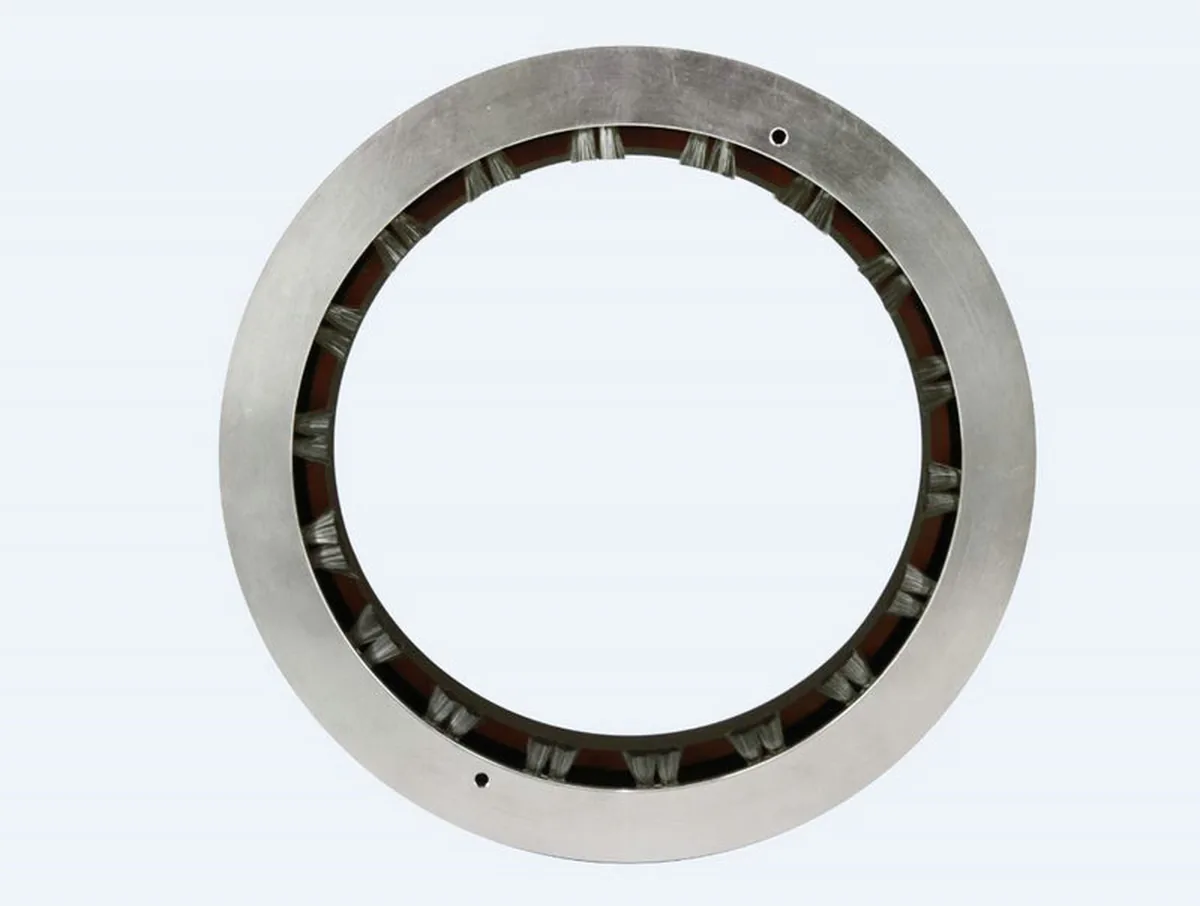
Solid ring product family: VS-RD / VS-RDW solid shaft grounding ring
Arc-shaped ring for retrofit or constrained installations: VS-ST / VS-STW arc-shaped shaft grounding ring
How an Insulated Bearing Works
An insulated bearing has an electrically isolating layer—typically a ceramic or polymer coating on the outer ring, inner ring, or housing seat—that blocks current from flowing through that bearing. The insulation raises the impedance of that path so that current cannot use it as a route to ground.
An important distinction: an insulated bearing does not reduce the shaft voltage itself. It blocks one current path. If only one bearing is insulated, the current that cannot pass through the insulated bearing may redirect to the non-insulated bearing on the other end, to the shaft coupling, or to connected equipment. An insulated bearing is most effective when combined with a complementary strategy that either grounds the shaft or insulates all remaining paths.
Shaft Grounding Ring vs. Insulated Bearing: Key Differences
| Factor | Shaft Grounding Ring | Insulated Bearing |
|---|---|---|
| Working principle | Provides a controlled low-impedance path from shaft to ground frame | Blocks current flow through the bearing by electrical isolation |
| Shaft-voltage discharge | Actively reduces shaft voltage by diverting charge to ground | Does not reduce shaft voltage; redirects or blocks the current path |
| Contact with shaft | Continuous conductive-fiber contact with the rotating shaft | No contact with shaft surface; isolation is in the bearing itself |
| Main function | Prevent shaft current from reaching the bearing by providing a preferred alternate path | Prevent current from passing through a specific bearing by isolating it |
| Retrofit suitability | Arc-shaped (split) rings can be fitted without full disassembly; solid rings require shaft access | Typically requires bearing replacement; more disruptive for retrofit |
| Maintenance considerations | Conductive fibers experience wear and should be inspected at defined intervals | Insulation layer can degrade under contamination, voltage spikes, or mechanical stress |
| Limitations | Effectiveness depends on installation quality, shaft surface condition, and grounding path integrity | Insulating one bearing may redirect current to the other bearing or connected equipment if no complementary grounding is provided |
When Is a Shaft Grounding Ring the Better Choice?
A shaft grounding ring is often the first measure considered for smaller and medium-sized VFD motors where shaft-to-ground capacitive discharge current is the primary concern. Because it diverts shaft voltage proactively, it reduces the electrical stress that reaches both bearings simultaneously.
- The motor is driven by a VFD and shows elevated shaft voltage
- Bearing failure has been diagnosed as EDM-related, with pitting or frosted raceways
- Retrofit is required without bearing replacement
- The motor is smaller and shaft-to-ground discharge current is more likely than circulating current
- Installation space allows mounting a solid or arc-shaped ring on the drive end or non-drive end
The grounding ring must be installed correctly to be effective. A clean shaft contact zone, secure mounting to the grounded frame, and a verified grounding path are all necessary. For installation guidance, see the shaft grounding ring installation guide.
Installation guidance: How to Install a Shaft Grounding Ring
When Is an Insulated Bearing Required?
Insulated bearings are more commonly applied in motors where circulating bearing current is a significant risk in addition to shaft-to-ground discharge. In circulating-current situations, the current flows in a loop through the shaft, both bearings, and the motor frame; a grounding ring alone may not prevent this.
- The motor is large and high-frequency circulating bearing current is a concern
- Motor standards or OEM specifications call for insulated bearings
- A grounding ring has already been installed but bearing damage on the non-drive end continues
- The system design requires a specific bearing to be electrically isolated from the frame
An insulated bearing on the non-drive end (NDE) is a widely referenced arrangement where a shaft grounding ring on the drive end (DE) handles shaft-to-ground discharge, while the NDE insulated bearing interrupts the circulating current loop. This is a common protection architecture described in various motor protection guidelines. Larger motors and systems with circulating bearing-current risk may require a coordinated protection arrangement, such as a shaft grounding ring at one end and an insulated bearing at the other. Final selection should be based on the actual current path, motor construction, grounding, drive system and connected equipment—not motor power alone.
When Might a VFD Motor Need Both?
For larger VFD motors or high-frequency drive applications, a shaft grounding ring on the drive end combined with an insulated bearing on the non-drive end is a protection strategy that addresses both shaft-to-ground discharge and circulating current simultaneously. The grounding ring provides the low-impedance discharge path; the insulated bearing interrupts the circulating-current loop.
Consider both measures when:
- The motor is large (power level and circulating-current risk should be reviewed application by application)
- Previous bearing failures have affected both the drive end and non-drive end
- The VFD carrier frequency is elevated, increasing high-frequency current exposure
- The motor is critical and protection redundancy is preferred
- OEM or motor manufacturer guidance specifies a combined approach
Note that insulating both bearings without providing a shaft grounding path does not resolve shaft voltage—it only blocks the discharge paths available. If both bearings are insulated and no grounding ring is fitted, shaft voltage may still accumulate and discharge through the shaft coupling or connected equipment.
Motor Protection Selection Checklist
Providing the following information makes it possible to review which protection strategy—grounding ring, insulated bearing, or a combination—may be appropriate for a specific motor and application:
- Motor power rating and supply voltage
- VFD make and model
- VFD switching / carrier frequency
- Shaft diameter and available mounting space (drive end and non-drive end)
- Rated speed and maximum operating speed
- Drive-end bearing type and designation
- Non-drive-end bearing type and designation
- Whether an insulated bearing is already installed (and on which end)
- Connected equipment and shaft coupling type
- Operating environment (dry, oil mist, oil cooled, dusty, washdown)
- New design or retrofit situation
- Measured shaft-voltage waveform or shaft-voltage peak value, if available
For the full selection input framework: How to Select a Shaft Grounding Ring for EC and VFD Motors
Frequently Asked Questions
Can I use a shaft grounding ring instead of an insulated bearing?
Not always. A shaft grounding ring addresses shaft-to-ground voltage discharge and may be sufficient when that is the dominant current mechanism. When circulating bearing current is also present—where current flows in a loop through the shaft, bearings, and frame—a grounding ring alone may not fully protect the non-drive-end bearing. Larger motors and systems with circulating bearing-current risk may require a coordinated protection arrangement, such as a shaft grounding ring at one end and an insulated bearing at the other. Final selection should be based on the actual current path, motor construction, grounding, drive system and connected equipment—not motor power alone.
Does insulating both bearings eliminate bearing current problems?
Insulating both bearings without providing a shaft grounding path does not resolve shaft voltage. With no discharge path to ground, shaft voltage continues to accumulate. The current may discharge through the shaft coupling or connected equipment instead, potentially causing damage elsewhere in the drivetrain.
Where should the shaft grounding ring be mounted—drive end or non-drive end?
Mounting position depends on the motor configuration, installation envelope, and grounding architecture. Drive-end mounting is common, but available space and the location of insulated bearings should both be considered. Review the installation drawing and motor end shield before specifying a position.
What shaft-voltage level indicates a grounding ring is needed?
There is no single threshold that applies to all motors and drives. Shaft-voltage measurement, interpreted alongside the motor size, VFD switching frequency, cable length, grounding arrangement, and observed bearing condition, gives a more complete picture. A measured shaft voltage alone is not sufficient to determine the right protection strategy without reviewing the full application context.
Conclusion
Shaft grounding rings and insulated bearings both have a role in VFD motor bearing protection, but they are not interchangeable. A shaft grounding ring diverts shaft voltage to ground before it reaches the bearing. An insulated bearing blocks a specific current path but does not reduce the voltage on the shaft. For many larger motors or high-frequency VFD applications, a combined approach—grounding ring on the drive end and insulated bearing on the non-drive end—addresses both discharge and circulating current mechanisms.
The right choice depends on the motor size, VFD characteristics, bearing configuration, and operating environment. Reviewing the application inputs listed in the checklist above before selecting a protection strategy helps ensure the chosen solution matches the actual current mechanisms present.
Explore grounding ring options: VOLSUN shaft grounding ring products
Not Sure Whether Your VFD Motor Needs a Grounding Ring, an Insulated Bearing, or Both?
Send us your motor data: power rating, VFD model and carrier frequency, shaft diameter, bearing types, whether an insulated bearing is already fitted, and your operating environment. Our engineering team will review the application and suggest a suitable bearing-current protection approach.
Submit Motor Data for Review