Why EV Drive Motors Need Shaft Current Protection
|
Inverter-induced shaft current can damage EV motor bearings through repeated electrical discharge. Learn how shaft grounding rings provide a controlled current path and support motor reliability.
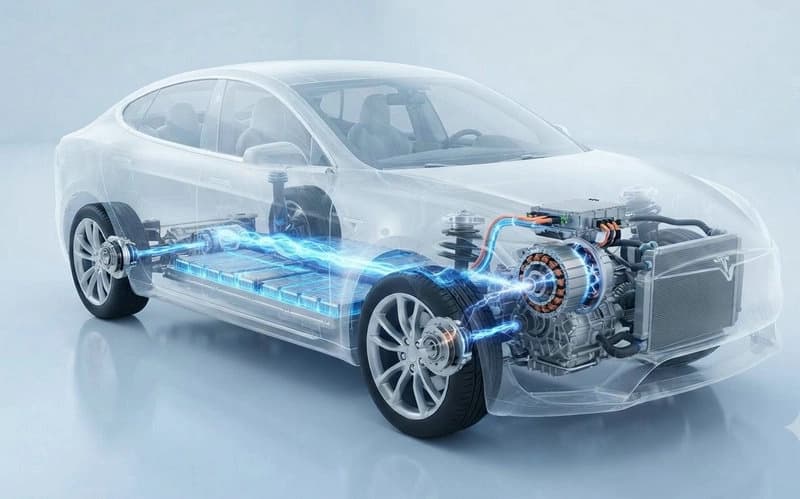
As electric vehicles move toward higher efficiency and greater power density, electric drive motors operate under more demanding conditions. Faster switching frequencies, higher voltages, and more compact motor designs improve vehicle performance, but they also raise new reliability questions around shaft voltage and bearing current.
One issue that is still easy to overlook in early design reviews is shaft current—and the bearing damage that can follow when inverter-generated high-frequency voltage finds a discharge path through the bearings.
What Is Shaft Current?
In modern electric drive motors, high-frequency voltage generated by the inverter can create a voltage difference between the motor shaft and the motor housing. When that voltage rises high enough, electrical current seeks a path to ground.
In many machines, that path passes through the motor bearings. Each discharge event may be very small, but repeated electrical discharges over long operating hours can damage bearing surfaces. This process is often described as electrical discharge machining (EDM). Over time it may contribute to bearing fluting, higher vibration, increased operating noise, and premature bearing damage.
As EV motors run at higher speeds and with higher switching frequencies, shaft current has become a more common engineering concern in traction and e-drive development.
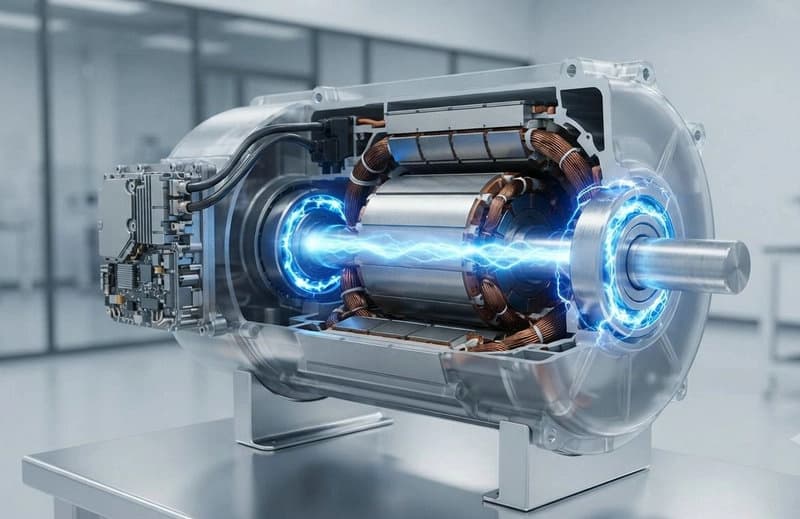
Illustration of inverter-induced shaft current and the possible discharge path through EV motor bearings.
Why Bearing Protection Matters
Bearings are intended to support smooth and efficient motor operation. Once bearing surfaces are damaged by electrical discharge, motor performance and service life can decline.
Typical consequences include:
- Increased vibration and operating noise
- Reduced bearing service life
- Higher maintenance and replacement cost
- Unexpected equipment downtime
For electric vehicles, motors are expected to operate reliably for many years across varying duty cycles. Addressing shaft current risk during design and validation is often more practical than managing repeated bearing failures after vehicles enter service. That is why more motor manufacturers evaluate shaft current protection early in the powertrain development process.
A Practical Approach: Shaft Grounding Rings
A widely used approach to reduce bearing discharge risk is to install a shaft grounding ring. Instead of allowing current to discharge through the bearings, the ring is intended to create a controlled current path that transfers shaft current from the rotating shaft to the grounded motor housing.
Compared with repeated bearing replacement or unplanned motor repair, a correctly specified and installed shaft grounding ring can be a practical preventive measure. It does not replace a full review of drive topology, cable routing, grounding practice, and bearing insulation strategy.
How Material Technology Makes the Difference
The performance of a shaft grounding ring depends on mechanical integration and on the conductive material that contacts the rotating shaft.
Traditional metal contact solutions may experience wear, oxidation, or unstable contact over time, especially in higher-speed applications. To address these challenges, Volsun developed its third-generation shaft grounding ring using metallized carbon fiber technology. The fiber design is intended to provide a balance of conductivity, flexibility and wear resistance, subject to application validation.
The conductive fibers are designed to support stable electrical contact under validated operating conditions, helping shaft current discharge through a controlled path while limiting additional friction when properly designed and installed.
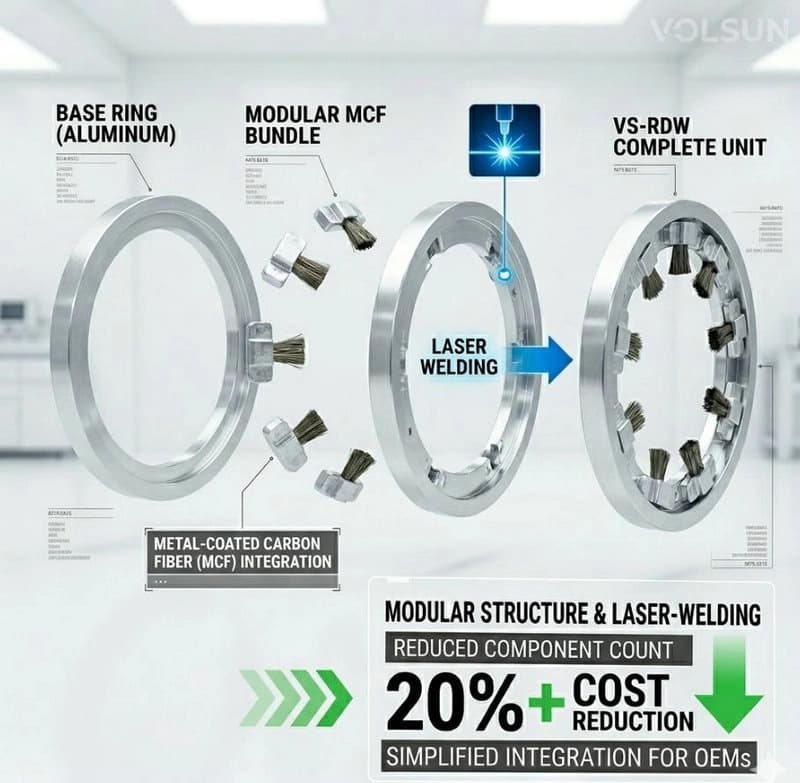
Structure illustration of Volsun's third-generation conductive-fiber shaft grounding ring.
Supporting Reliable EV Powertrain Systems
As EV platforms continue to evolve, reliability is becoming as important as efficiency and performance. Effective shaft current protection is one step toward supporting long-term motor reliability in inverter-driven powertrains.
Volsun continues to develop conductive material technologies and shaft grounding solutions that help manufacturers evaluate bearing protection options for passenger EVs, commercial vehicles, and other inverter-driven applications. The right configuration depends on shaft geometry, speed, environment, installation space, and the electrical architecture of the motor system.
Key Parameters for Application Review
For a preliminary shaft grounding review on an EV drive motor, provide the following application inputs where available:
- Shaft diameter and tolerance
- Maximum and continuous speed
- Operating temperature
- Dry, grease, oil or water exposure
- Measured shaft voltage or shaft current
- Available radial and axial space
- Installation position
- Expected service life
- Bearing insulation configuration
These inputs support a preliminary engineering review of contact feasibility, mounting options, and environmental fit. Final configuration should be validated under application-relevant motor conditions.
Conclusion
Inverter-generated high-frequency voltage can create a voltage difference between the shaft and motor housing. When bearings become the discharge path, electrical discharge machining may lead to bearing fluting, vibration, operating noise, and premature bearing damage.
A shaft grounding ring provides a controlled current path intended to divert shaft current away from the bearings. Conductive-fiber designs such as Volsun’s third-generation shaft grounding ring use metallized carbon fiber contact and should be selected and validated against the actual EV motor duty profile.
Need a Shaft Grounding Solution for Your EV Motor?
Send us your shaft diameter, motor speed, operating temperature, lubrication condition, installation space and expected service life.
Volsun's engineering team will review the application and recommend a preliminary shaft grounding ring solution.
Related pages: Shaft Grounding Ring vs. Carbon Brush: An Engineering Comparison for VFD Motors
Oil-Cooled EV Motor Protection with VS-RDW Shaft Grounding
Need sizing help?
Send motor nameplate data and shaft diameter - we respond within 24 hours.
Submit EV Motor Requirements